
Our values
If we take the Universal Declaration of Human Rights seriously, Basic Income will have to be implemented yesterday.
If all humans are born free and equal in dignity and rights and should act towards one another in a spirit of brotherhood, as stated in article 1 of the Universal Declaration of Human Rights;
if every single human is entitled to all the rights and freedoms, without distinction of any kind, as stated in article 2;
if every single human has the right to life, liberty and security and shall not be held in slavery nor servitude, as stated in article 3 and 4;
if every single human has a right to social security needed for a life in dignity and a freely developed personality and is entitled to free choice of employment, as stated in article 22 and 23;
if every single human has the right to a standard of living adequate for their health and well-being as stated in article 25;
Why then, has Basic Income not become a reality yet?
There is no excuse not to implement a Basic Income, it is as simple as that.
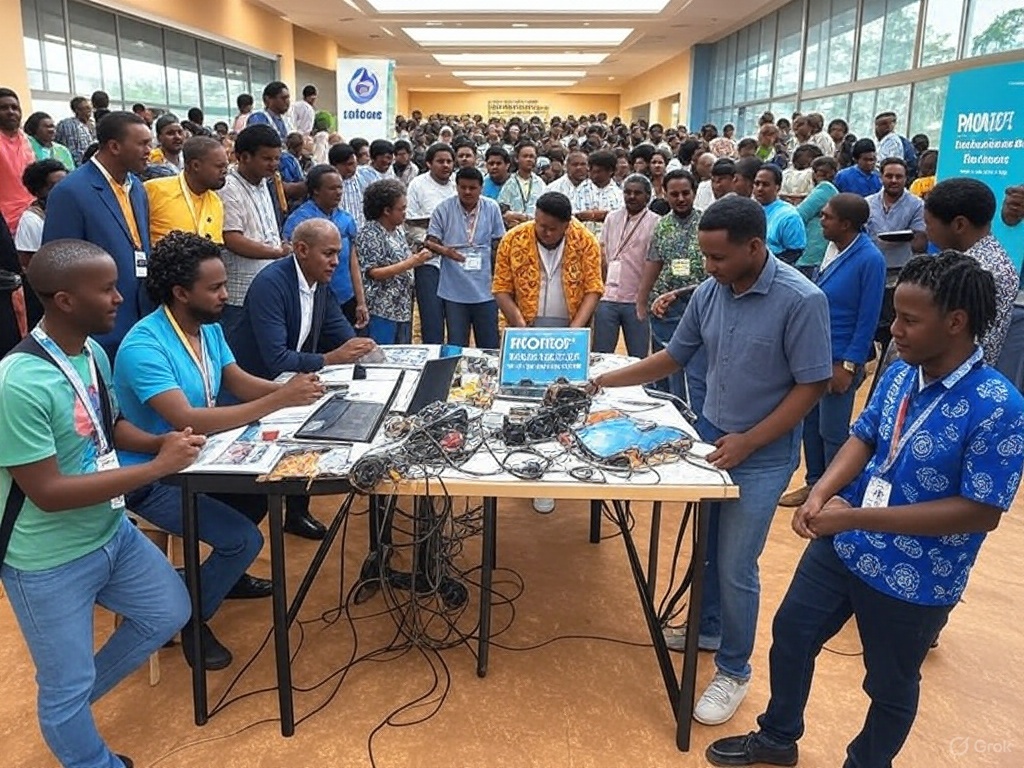
All organising work is done by the local community itself, through a process of Self-Organised Learning in the community, involving several democratic processes in decisionmaking, problemsolving and training on the ground. This process can be facilitated by Mission Possible 2030, we have experts in the field of Self-organised Learning in our team. Allowing and facilitating ownership and coordination to the community, also changes the way we see each other. We’d rather not call the ones who receive a basic income ‘beneficiaries’ as they are often referred to. In fact both the ‘giver’ and the ‘receiver’ are beneficiaries in this transaction. Instead, we call all people involved Participants.
Indicators like the local poverty line and pension schemes can help to define the ideal hight of the Basic Income in a pilot. In choosing the right time-interval, local expenditure patterns and accessibility to the money (computer, phone, bank etc) are usually taken into account.
Basic income, by definition, should be for the entire lifetime. In Basic Income pilots, the period is much shorter. We aim for a Basic Income given for a minimum of 18 months and ideally 3 years, to make a substantial dent in the lives of people. The rationale behind 18 months is that twelve months is a normal cycle of normal recurring household expenses towards basic needs, and the additional six months is given to allow for the ascending and descending momentum of change. The experiences of the Basic Income pilots demonstrate that the momentum generated during this period has a lasting medium term and long term effects on people and the communities.
The amount of money to be given every month or every week is to be determined based on the local conditions in close conversation with the participants. As a benchmark we propose a minimum of a value matching the local poverty line for every adult and half of that amount for every child, paid through the mother. In Kenya for example, “The overall poverty lines in monthly adult equivalent terms were calculated as KSh 4,358 and KSh 8,006 for rural and urban areas, respectively” (Kenya Poverty Report 2022).
We do not see each basic income project as an opportunity to generate evidence that Basic Income works and has positive effects on individual lives, households, as well as on the overall community. There are innumerable studies that prove the efficacy of Basic Income. The Basic Income we provide is purely unconditional and the participants are under no obligation to do anything in return, including to tell their story. As a community it is left to their collective and individual decision as to how and where they want to tell their story. So, our Basic Income process is in principle not accompanied by any research study. We prefer that the story goes out into the world by means of the natural channels of communication of the community itself.
Financial transactions fall under the category of behavioral data. As Basic Income ignores your behavior (everyone gets it regardless of one’s behavior), there is no need for data collection of one’s transactions. Therefore, we limit the data collection to the absolute minimum. The only thing we ‘need to know’ is if you are human, unique and alive. Working together with local communities is essential, so that personal data can be stored locally. Where possible we will do our best to keep transactions and the collection of personal data there where it belongs: with the people themselves. Afterall, when you use physical cash, none other than the two people involved in the transaction know when, where and what you bought, and how much it cost.